 College Baseball
2026 College Baseball's forty4 Baseball Top 25 Final Rankings
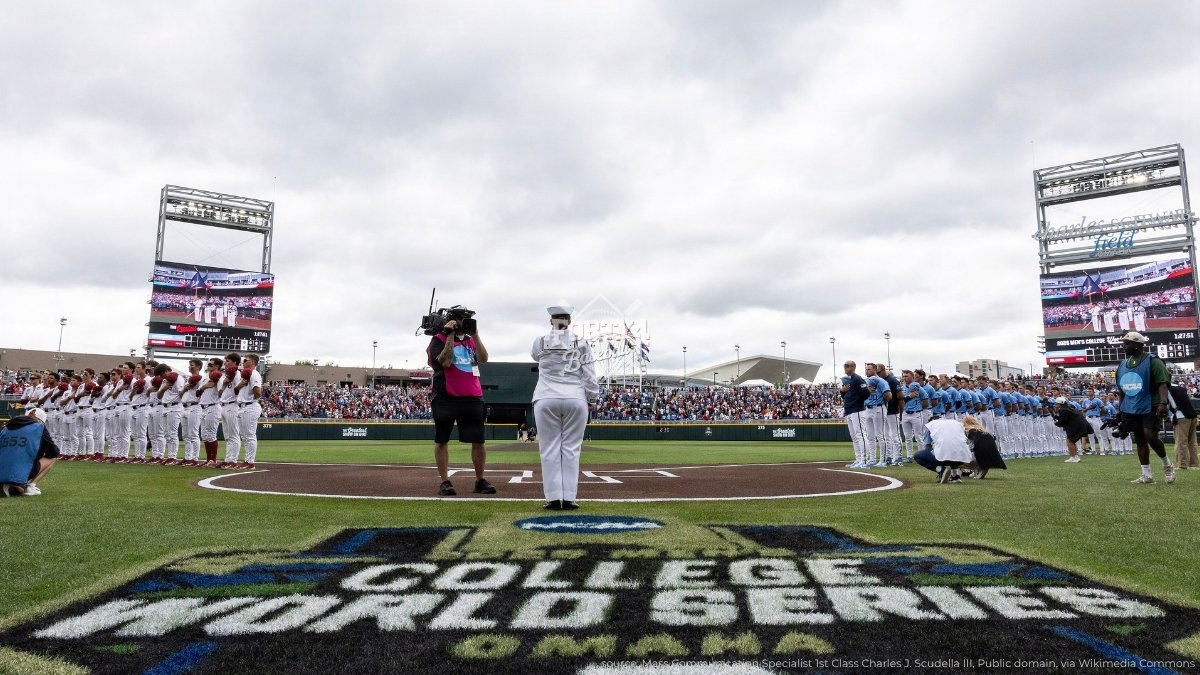
The final poll is set. Oklahoma is the 2026 national champion, North Carolina is the runner-up, and the rest of the Top 25 reflects a season in which June changed the shape of the sport. Oklahoma entered Omaha after losing its final four regular-season series and left as the program's first national champion since 1994.
2026 College Baseball's forty4 Baseball Top 25 Final Rankings
1. Oklahoma Sooners — 43-23
Oklahoma gets the top spot because it finished the only way that matters in June — as national champion. The Sooners knocked out Georgia Tech in a regional, beat Alabama and Georgia in Omaha, then took down North Carolina in the championship series to win their third national title and first since 1994.
2. North Carolina Tar Heels — 54-14
North Carolina had the best overall record in this group and reached the championship series for the first time since 2007. The Tar Heels survived a tough super regional against Southern California and then won three straight games in Omaha before Oklahoma finally stopped them.
3. Georgia Bulldogs — 53-14
Georgia had a season worthy of a top-three finish. The Bulldogs won both the SEC regular season and tournament titles, went 30-9 against SEC opponents and reached Omaha as one of the tournament's most complete teams.
4. West Virginia Mountaineers — 47-17
West Virginia turned another strong season into a deeper October — or, in college baseball terms, June — run. The Mountaineers swept Cal Poly in the super regional and then beat Troy in Omaha before North Carolina ended their season.
5. Texas Longhorns — 46-15
Texas had the profile of a national contender from start to finish. The Longhorns reached Omaha, beat Alabama to stay alive and then ran into Georgia twice, finishing one win short of the College World Series final.
6. Alabama Crimson Tide — 42-21
Alabama earned this spot with a season that ended in Omaha and included an SEC regular season built around consistency. The Tide could not get past Oklahoma in their opening College World Series game, but their overall body of work held up.
7. Ole Miss Rebels — 41-23
Ole Miss made Omaha the hard way. The Rebels came through the SEC tournament field, reached the College World Series and then lost to North Carolina before Troy eliminated them. That postseason run moved them well above where they stood earlier in the year.
8. Troy Trojans — 39-32
Troy is the biggest non-Omaha story in the final eight. The Trojans beat Florida twice to reach the super regionals, swept Little Rock there and then won an Omaha game over Ole Miss. The record is unusual for a team this high, but the postseason was impossible to ignore.
9. Auburn Tigers — 42-22
Auburn was one of the country's best teams for much of the spring, but its postseason ended earlier than expected. Ole Miss swept the Tigers in the super regional, leaving Auburn just outside the final College World Series field.
10. Georgia Tech Yellow Jackets — 50-11
The record is almost startling. Georgia Tech won 50 games and lost only 11, yet its season ended in the regional after Oklahoma erased a 9-3 loss, won the deciding game 8-7 in 10 innings and walked off the national seed.
11. UCLA Bruins — 52-8
UCLA may have the most difficult final ranking to explain with a record alone. The Bruins were the No. 1 team entering the postseason and lost only eight games all year, but Cal Poly eliminated them in the regional, forcing a major postseason discount.
12. Kansas Jayhawks — 45-18
Kansas put together one of the strongest seasons in program history and earned a national seed. The Jayhawks did not get the deep tournament run they wanted, but 45 wins and sustained success throughout the season made them a clear Top 25 team.
13. Oregon Ducks — 43-18
Oregon kept building on a strong regular season and finished among the nation's better complete teams. The Ducks did not make Omaha, but their consistency from February through the postseason made this ranking feel earned.
14. Mississippi State Bulldogs — 43-19
Mississippi State remained a major SEC presence throughout the year. The Bulldogs finished with 43 wins and a strong enough résumé to stay comfortably inside the final poll even without the late postseason run of the teams above them.
15. Southern California Trojans — 48-18
USC deserves one of the largest jumps in the final poll. The Trojans won at North Carolina in the opening game of their super regional and pushed the Tar Heels to a deciding game before falling short. Their 48-win season was too substantial to leave them out of the final 15.
16. Florida Gators — 41-21
Florida had another strong regular season but became one of Troy's biggest victims in the postseason. The Gators lost twice in the Troy regional, ending a season that still included 41 wins but fell short of preseason expectations.
17. Texas A&M Aggies — 41-16
Texas A&M's record remained excellent, and the Aggies spent much of the year looking like a national contender. They finish lower here because the postseason did not match the strength of the regular-season résumé.
18. Florida State Seminoles — 40-19
Florida State won 40 games and remained a difficult team to overlook. Still, St. John's ended the Seminoles' regional on the opening weekend of the NCAA Tournament, creating a sizable gap between their regular-season standing and final position.
19. Cal Poly Mustangs — 39-24
Cal Poly earned its place by taking down the No. 1 national seed UCLA in the regional. The Mustangs then reached the super regional and faced West Virginia, making their June run one of the defining surprises of the tournament.
20. St. John's (NY) Red Storm — 36-26
St. John's became one of two No. 4 seeds to reach the super regional round. The Red Storm knocked off Florida State in the regional final, then pushed into the final 20 with a postseason résumé that was far more memorable than its win total alone.
21. Little Rock Trojans — 39-28
Little Rock followed the same script as St. John's. The Trojans won a regional as a No. 4 seed, beating Southern Miss and Jacksonville State, then reached the super regional against Troy.
22. Oregon State Beavers — 45-14
Oregon State's 45 wins are among the best records in this poll, which makes the final ranking feel harsh. The Beavers simply did not get the postseason finish that teams around them produced.
23. Arkansas Razorbacks — 41-22
Arkansas remained a strong SEC team and finished with 41 wins. The Razorbacks were good enough to stay in the final Top 25, but their tournament exit kept them from matching the expectations that surrounded them in the spring.
24. Southern Miss. Golden Eagles — 44-17
Southern Miss had another 40-win season and a résumé that would have placed it much higher in a normal week. Little Rock's comeback regional win changed the postseason picture and ultimately pushed the Golden Eagles down this final list.
25. Oklahoma St. Cowboys — 39-22
Oklahoma State finishes the season as one of the final 25 teams standing after a strong regular season. The Cowboys won their regional opener against USC Upstate before Alabama eliminated them, but 39 wins still made the final cut.
Oklahoma's improbable title run changed the way the 2026 season ended
The simplest way to understand this season is to look at what happened to the teams that spent most of the spring at the top.
UCLA was 25-2 through March 29 and remained the No. 1 team entering the postseason. Georgia Tech was 22-5 at that point and eventually finished 50-11. Texas, Georgia, North Carolina and Mississippi State all spent significant portions of the season near the top of the national conversation.
Then June arrived.
Cal Poly knocked out UCLA. Oklahoma erased Georgia Tech. Troy beat Florida. St. John's beat Florida State. Little Rock beat Southern Miss. Suddenly, a tournament that looked built around the country's established powers had room for teams that had not been part of the preseason script.
Oklahoma's run was the clearest example. The Sooners finished 11th in the SEC and went 14-16 in conference play. They had also lost their final four regular-season series. None of that mattered once the tournament began. Oklahoma won its regional by beating Georgia Tech twice after losing the opener to the Yellow Jackets, then went to Omaha and beat Alabama, Georgia and North Carolina.
That is why the Sooners are No. 1 here. The final ranking should remember the whole season, but it should also recognize what a team did when the season was on the line.
Georgia and North Carolina showed how good the top of the field really was
There is a temptation to look at Oklahoma's championship and treat the season as a story about one team. I don't see it that way.
North Carolina was outstanding. The Tar Heels finished 54-14, reached the championship series and did it after surviving Southern California in a three-game super regional. They then handled West Virginia in Omaha and won their first championship-series game against Oklahoma.
Georgia was just as convincing for most of the year. The Bulldogs won the SEC regular season and tournament, finished 53-14 and reached Omaha as a national seed. They beat Texas in the opening round before Oklahoma eliminated them in two games.
West Virginia deserves similar credit. The Mountaineers entered the field as the No. 16 national seed, swept Cal Poly and then reached the final four in Omaha. Their season ended against North Carolina, but the postseason validated a team that had been climbing for months.
The final four also tell us something about the sport. The field did not belong exclusively to the SEC, even though the conference supplied several of the teams in Omaha. Oklahoma won the title, North Carolina reached the final, and West Virginia made the final four. The old assumptions about who can win in June looked a little less reliable by the end.
UCLA and Georgia Tech were the biggest misses while Troy and the No. 4 seeds changed the picture
The largest surprise at the top is UCLA.
The Bruins entered 2026 as the preseason No. 1 team, while Georgia Tech was No. 4. Oklahoma was No. 19 in that preseason poll. By the end, Oklahoma was No. 1, UCLA was No. 11 and Georgia Tech was No. 10.
That does not mean UCLA had a bad season. A 52-8 record is extraordinary. But this is a season-ending poll, not a regular-season résumé exercise. Losing the regional to Cal Poly forced us to account for what happened when the stakes were highest.
Troy went the other direction. The Trojans were outside the preseason conversation, reached the super regionals and then won an Omaha game. St. John's and Little Rock also started outside the national discussion and finished inside this Top 25 after reaching the super regional round.
Oklahoma is the most extreme example of all. A team that entered the preseason Top 25 at No. 19 ended the year at No. 1 because it kept winning when everyone else had to stop.
The final 2026 poll says more about June than February
This is where I land on the season.
I would rather have a final poll that respects the regular season without letting it overpower the postseason. That is what this ranking tries to do.
UCLA deserves to be ranked. Georgia Tech deserves to be ranked. Oregon State deserves to be ranked. Their records are too good to dismiss. But none of them finished in Omaha.
Oklahoma did.
The Sooners were not the best team every week. They were not even close to the best team in their own conference for stretches. They became the best team when the tournament reduced the sport to one question — can you win the next game?
That distinction matters. College baseball gives teams a long runway to build a résumé, but June is where that résumé gets tested. Oklahoma passed every test it was given. That makes No. 1 an easy decision.
North Carolina gets No. 2 because the Tar Heels were excellent from beginning to end and came within one game of the title. Georgia gets No. 3 because its season was too complete to push lower. West Virginia and Texas round out a top five that reflects both regular-season strength and postseason performance.
After that, the order gets harder. That is a good thing. Alabama, Ole Miss, Auburn, Georgia Tech and UCLA all have legitimate arguments. So do Kansas, Oregon and Mississippi State. The difference is mostly about where their seasons ended.
That is what made 2026 such a good college baseball season. The numbers told one story. June told another.
North Carolina, UCLA and the 2027 contenders face very different roster questions
The first thing to watch for 2027 is how much of this year's talent actually returns to campus. With the 2026 MLB Draft still ahead as of this season-ending vantage point, there is no honest way to assign specific draft outcomes yet. The important point is that several of these teams have players whose professional decisions will shape next year's roster.
North Carolina has a particularly interesting foundation. Caden Glauber established himself as one of the country's most intriguing young arms during the championship run, and the Tar Heels also developed a roster built around athleticism and depth. Their challenge will be replacing veteran production while keeping enough of that core intact to make another Omaha push.
UCLA faces the opposite question. The Bruins proved they had the talent to dominate the regular season. The next step is making sure that talent translates into a deeper postseason run after the shocking regional loss to Cal Poly.
Georgia has perhaps the cleanest argument for staying near the top. The Bulldogs already showed they can win the SEC and handle the pressure of hosting deep into June. The question is whether they can replace the pieces that leave without losing the depth that made the 2026 roster so difficult to beat.
Texas, West Virginia, Alabama and Ole Miss also belong in the early 2027 conversation. All four reached Omaha, and all four now have a clear reference point for what it takes to get back.
Then there are the teams that changed the definition of a contender this June. Troy, Cal Poly, St. John's and Little Rock will enter the offseason with something more valuable than a good record. They know they can play in the postseason against teams that were supposed to be better than them.
That matters.
The 2026 season is over. Oklahoma has the trophy. North Carolina has the runner-up finish. But the final Top 25 leaves plenty of evidence that the 2027 race will not start from scratch. It will start with a group of teams that learned very different lessons in Omaha, and another group that learned how quickly a season can change once June arrives.