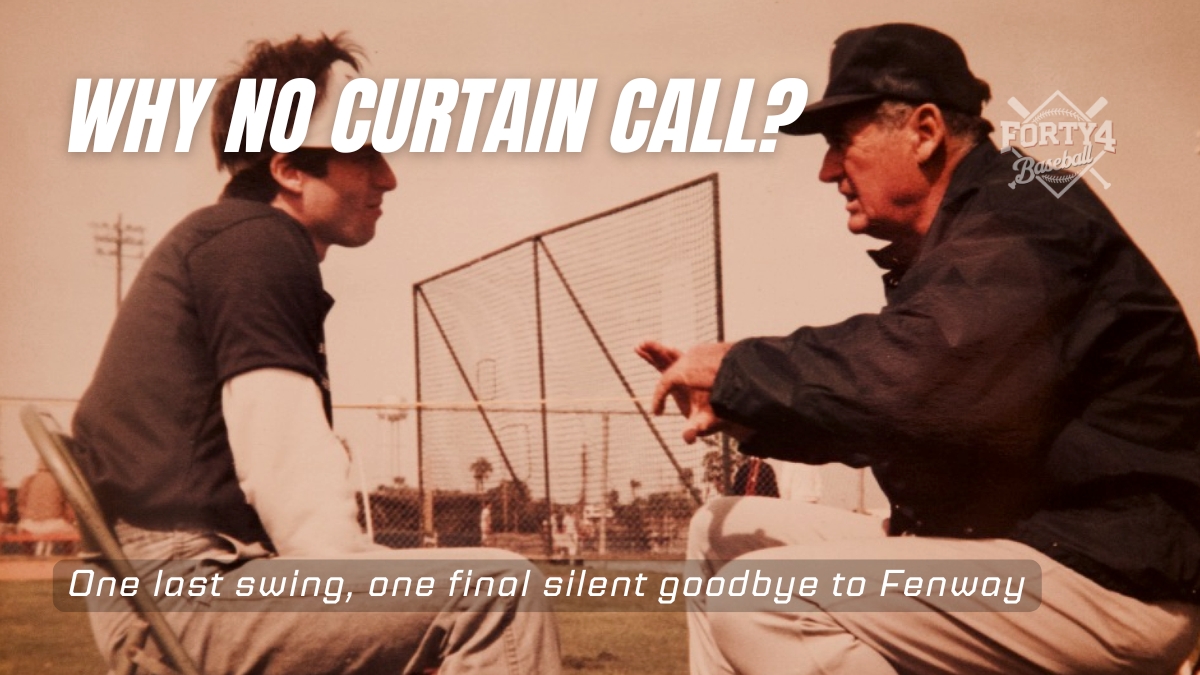
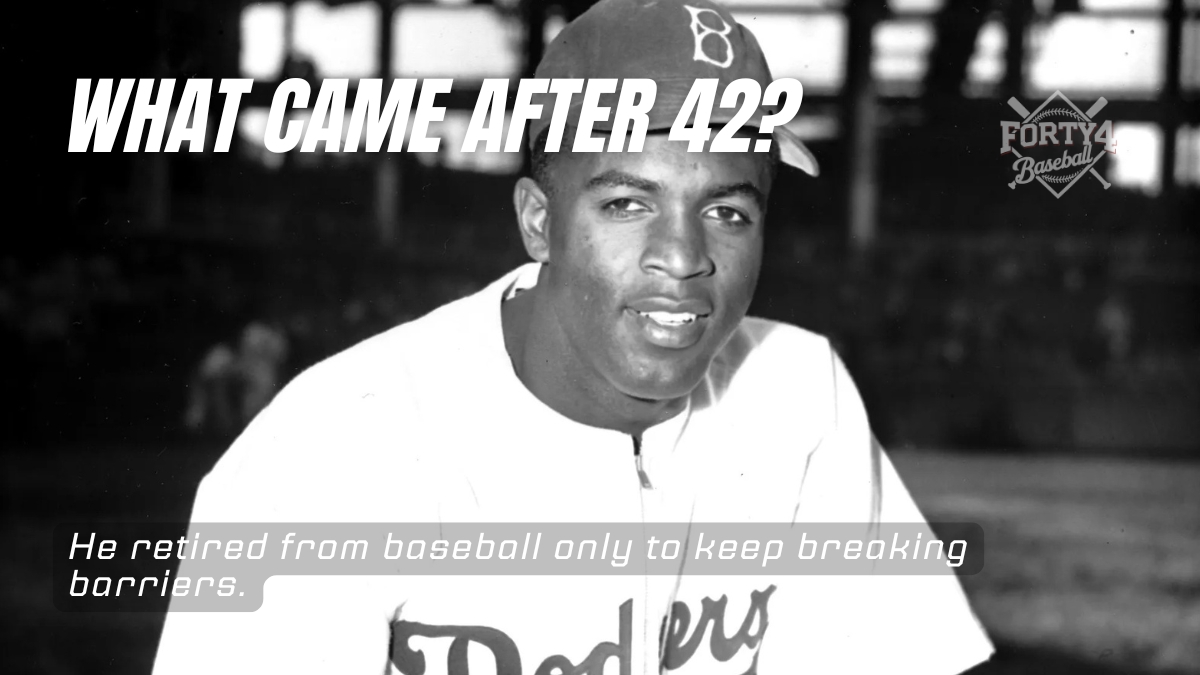
Jackie Robinson's baseball career ended over a game he never played. On December 13, 1956, the Brooklyn Dodgers traded him to the New York Giants, their most bitter rival, for a relief pitcher and thirty thousand dollars. Robinson never suited up for New York's other team, not for a single inning. Within hours of hearing the news, he had already decided his playing days were over, and the reason had almost nothing to do with wounded pride over the trade itself. It had everything to do with a decision Robinson had quietly made weeks earlier, one that had nothing to do with baseball at all.
That is the part of the story most fans never quite absorb. Robinson didn't storm off in anger. He walked away with a plan already in his pocket, and the plan was bigger than any lineup card.
A Decision Made Long Before the Trade
By the fall of 1956, Robinson was 37 years old and beginning to feel every one of those years in his legs. He had just helped Brooklyn to a National League pennant, hit a respectable .275 in his final season, and delivered clutch at bats in a seven game World Series loss to the Yankees. On the surface, there was still gas in the tank. But privately, Robinson had already lined up a job as vice president of personnel at Chock full o'Nuts, the New York coffee chain, and had sold his retirement story exclusively to Look magazine for publication in January. He knew his career was ending on his own schedule, regardless of what any front office decided to do with him first.
So when the Dodgers shipped him to the Giants, the timing looked, to the outside world, like spite. Reporters and Dodgers executives accused him of holding a grudge, of disloyalty, of staging a stunt. Robinson answered it all with a letter to Giants owner Horace Stoneham that could not have been more direct. He told Stoneham plainly that his retirement had nothing to do with the trade at all, that his mind had simply moved on to the next chapter of his life. It was signed, fittingly, on Chock full o'Nuts stationery. Ten years after breaking baseball's color line at Ebbets Field, Jackie Robinson left the game the same way he had entered it: entirely on his own terms, immune to whatever noise the world tried to make around him.
Breaking a Different Kind of Barrier
What Robinson did next tends to get buried underneath the highlight reels of his playing days, and that is a shame, because it might be the most Robinson thing he ever did. He became the first Black vice president of a major American corporation, a title that mattered every bit as much to him as any of his six All Star selections. He didn't take the job as a ceremonial figurehead either. Robinson used his position at Chock full o'Nuts to push for better treatment of the company's workers, extending the same fight for dignity that had defined his decade on the field into an entirely new arena where nobody expected to see him at all.
From there, his life only grew louder in purpose. Robinson became a nationally syndicated newspaper columnist, writing candidly about race, politics, and everyday injustice for readers who had once only known him as a ballplayer. He joined the board of the NAACP, spoke at rallies, and stood shoulder to shoulder with the movement's biggest names at the March on Washington in 1963, no longer wearing Dodger blue but still instantly recognizable, still impossible to ignore. He wrote letters, unflinching ones, to sitting presidents, pushing men as powerful as Eisenhower and Kennedy to do more, faster, for the cause of civil rights. He helped found the Freedom National Bank in Harlem, a Black owned financial institution built to serve a community that mainstream banks had too often overlooked. Somewhere along the way, Hank Aaron once relayed a piece of wisdom Robinson had shared with him directly, and it captures the man better than any statistic ever could. Robinson told him that the game of baseball is great, but the greatest thing is what you do after your career is over.
The Number That Refused to Fade
Robinson never got to see just how far his influence would travel. He died in 1972 at only 53 years old, worn down by heart disease and diabetes, having lived every one of those years at full volume. But baseball was not finished honoring him. On April 15, 1997, exactly fifty years after he first stepped onto Ebbets Field, Major League Baseball retired his number 42 across every single team in the sport, the first jersey number ever retired league wide in any major American professional sport. President Bill Clinton stood beside Rachel Robinson that day as Commissioner Bud Selig made it official, declaring that number 42 now belonged to Jackie Robinson for the ages. A handful of players already wearing it were grandfathered in, and when Yankees closer Mariano Rivera finally retired in 2013, still wearing 42 out of respect, an entire era quietly closed. These days, every player, coach, and umpire in the sport wears that number once a year on Jackie Robinson Day, a living tribute that turns an entire league blue and white and unified, if only for an afternoon.
That is the real shape of Jackie Robinson's legacy, and it is why his retirement from baseball was never really an ending at all. He walked off the field in 1956 with a business card in one pocket and an unshakable sense of purpose in the other, and he spent the next sixteen years proving that the barrier he broke on a Brooklyn infield was only the first one he intended to knock down. Baseball gave Jackie Robinson a stage. What he built once the lights went down on his playing career is the reason the whole country still says his name.